


What if your post-shower hair isn’t proof of hair loss? If hair feels thinner after shower, wet strands may be clumping together, lying flat, and making more scalp visible. Water changes how your hair sits, while washing can gather loose strands in the drain. That can be unsettling, but a handful of hair after one shower can’t tell you whether you’re shedding more than usual or experiencing a lasting change in density.
It makes sense to pay attention to a change. The useful clue is whether it continues over time, not how your hair looks in one shower. This article explains why wet hair can seem thinner, how to distinguish shedding from breakage, and what patterns may be worth discussing with a medical professional. You’ll also find practical ways to track changes and choose your next step.
Key Takeaways
- When hair feels thinner after shower, wet strands can gather together and make more scalp visible without proving hair loss.
- Notice whether loose strands are full-length hairs or shorter snapped pieces. This can help you track shedding versus breakage.
- Let your hair dry fully before comparing, take photos in consistent conditions, and handle wet strands gently as you monitor changes.
- Persistent changes are worth discussing with a medical professional. TRU BLOOM Hair Growth Vitamins are Clinically Proven, but a product is not a diagnosis for shower-related thinning.
Why Hair Can Feel Thinner After a Shower
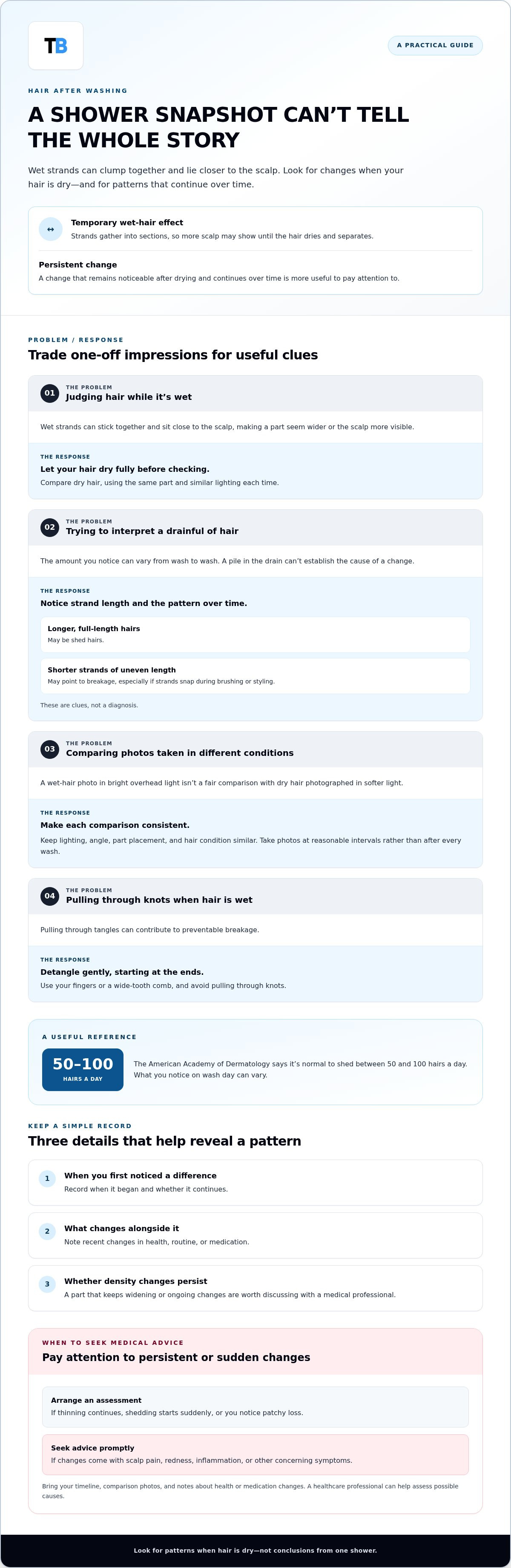
Seeing more scalp or less volume after washing can be startling. If hair feels thinner after shower, the change may come from how wet strands sit, not from a sudden loss of density. Water makes strands gather into sections, so less hair spreads across the scalp at once. The scalp may show through more, especially along a part or under bright bathroom lighting.
A temporary wet-hair effect changes how strands sit; a persistent density change remains noticeable after your hair dries and over time. One shower observation can’t establish whether hair loss is happening or identify its cause. Pay more attention to the pattern when your hair is dry.
Why Wet Strands Can Make the Scalp More Visible
Dry strands tend to separate and spread around the head. When wet, they stick together in narrow sections and lie closer to the scalp. This reduces the space hair occupies, so the same part may seem wider until the strands dry and separate again. A visible part in wet hair alone isn’t a reliable measure of density.
Does Hair Look Different When It Is Wet?
Yes. Damp, clumped strands can reveal more scalp than dry, separated hair, even when the amount of hair hasn’t changed. To compare fairly, check your hair after it has dried, using similar lighting and the same part each time. A photo taken in bright overhead light after a shower isn’t a fair comparison with one taken in softer light on dry hair.
Shedding is separate from the way wet strands clump. Telogen effluvium is a hair-cycle condition that can involve increased shedding after certain triggers, but a shower observation alone can’t tell you whether that’s happening. Track changes beyond wash day and note whether they persist when your hair is dry.
Shedding, Breakage, or Thinning: How to Tell the Difference
Hair in the drain can be hard to interpret. Look for a pattern rather than drawing conclusions from one strand or one wash. Shedding, breakage, and gradual density changes have different clues, but none can be confirmed from a single shower.
| What you notice | Possible clue |
|---|---|
| Longer, full-length hairs | May be shed hairs; the amount can vary from wash to wash. |
| Shorter strands of uneven length | May point to breakage, especially if strands snap during brushing or styling. |
| A part that keeps widening or less density over time | May indicate a persistent change worth discussing with a medical professional. |
What Breakage and Shedding May Look Like
Breakage can leave short pieces among longer strands, while shedding may involve hairs closer to their full length. These are clues, not a diagnosis. Hair length, recent styling, detangling habits, and changes over time all matter. The American Academy of Dermatology’s hair-loss overview explains that hair loss has different types and causes.
Repeated changes matter more than one wash-day impression. The amount of shed hair varies, and a pile in the drain can’t establish a cause or diagnose hair loss.
When a Change in Density Deserves Attention
Take persistent changes seriously. A part that continues to widen or ongoing changes in density are reasons to seek medical advice. Arrange prompt clinical assessment for sudden or patchy hair loss, or changes accompanied by pain or inflammation.
If you’re exploring options for ongoing hair-growth concerns, learn about TRU BLOOM Hair Growth Vitamins. They’re a product option, not a diagnosis for shedding, breakage, or a change in density.
What to Do if Your Hair Seems Thinner After Washing
If hair feels thinner after shower, use a steady check-in plan instead of judging by one wash. A consistent record can help you notice a real pattern and give a clinician useful details if you need an assessment.
- Let your hair dry fully. Check it when it’s dry, not wet or clumped.
- Take comparison photos. Keep the lighting, angle, part placement, and hair condition consistent. Repeat at reasonable intervals rather than photographing after every wash.
- Record changes. Note when you first noticed a difference, whether it’s ongoing, and any recent changes in health, routine, or medication.
How to Track Hair Changes Without Overreacting
Focus on patterns over time, not on counting every strand in the drain. The American Academy of Dermatology says it’s normal to shed between 50 and 100 hairs a day, though what you notice on wash day can vary. Handle wet hair gently: use a wide-tooth comb or your fingers to detangle, start at the ends, and avoid pulling through knots. This can reduce preventable breakage.
When to Talk With a Healthcare Professional
Arrange an assessment with a qualified healthcare professional if thinning continues, shedding starts suddenly, or you notice patchy loss. Seek advice promptly if changes come with scalp pain, redness, or other concerning symptoms. Bring your timeline, photos, and notes about health or medication changes. Don’t self-diagnose or start supplements as a substitute for an assessment. A clinician can help determine what may be causing the change.
If you’re exploring options for ongoing hair-growth concerns, learn about TRU BLOOM Hair Growth Vitamins. They’re a product option, not a diagnosis or guaranteed answer to a change noticed after washing.
Hair Growth Options: Evidence, Expectations, and TRU BLOOM
Hair that seems thinner after washing can have different explanations, including wet strands clumping, breakage, shedding, or an ongoing change in density. The right next step depends on the pattern and, when needed, a clinical assessment. A product is not a diagnosis for the cause.
What Clinically Proven Means for TRU BLOOM Hair Growth Vitamins
TRU BLOOM Hair Growth Vitamins are Clinically Proven in a large government-published study. They are one of only three hair growth vitamin brands in the United States that are Clinically Proven to work. This evidence applies to the vitamins; it doesn’t identify why your hair feels thinner after showering or diagnose a particular cause.
Keep product claims distinct. TRU BLOOM Hair Thickening Spray is not Clinically Proven. Hair thickening products and hair growth vitamins are different options, and using the spray isn’t evidence that an underlying cause of thinning has changed.
Choosing a Next Step That Fits Your Concern
If thinning persists, starts suddenly, appears in patches, or comes with other symptoms, put assessment first. A qualified healthcare professional can help evaluate what’s happening and whether treatment is appropriate. Don’t use a supplement to replace that assessment or self-prescribe based on a wash-day impression.
If you’re exploring an ongoing hair-growth option, review the product information for TRU BLOOM Hair Growth Vitamins. TRU BLOOM offers a 100-day risk-free money-back guarantee as a purchase assurance. It isn’t a promise of a medical outcome or evidence that the vitamins address a shower-related cause.
Track the Pattern, Then Choose Your Next Step
If hair feels thinner after shower, remember that wet strands can clump and reveal more scalp without proving hair loss. Check your hair when it’s fully dry, compare photos taken under similar conditions, and pay attention to changes that continue over time. Persistent thinning, sudden shedding, or patchy loss deserves assessment by a qualified healthcare professional.
For ongoing hair-growth concerns, TRU BLOOM Hair Growth Vitamins are Clinically Proven in a large government-published study. That claim applies to the vitamins, not the Hair Thickening Spray, and it doesn’t diagnose or guarantee an answer to a shower-related change. The 100-day risk-free money-back guarantee is a purchase assurance, not a promise of a medical outcome.
Explore TRU BLOOM Hair Growth Vitamins and review the product information as you consider your next step. Keep tracking changes and seek medical advice when they persist.
Frequently Asked Questions
Why does my hair feel thinner when it is wet?
Wet strands clump together and lie closer to the scalp, so less hair spreads across your head. That can make your part seem wider and reveal more scalp than when your hair is dry and separated. The reason hair feels thinner after shower is often this temporary change in how strands sit, not a sudden loss of density. Compare your hair when fully dry.
Is it normal to see hair in the shower drain?
Seeing some loose hair in the shower drain can be normal. Hair sheds as part of its growth cycle, and washing may gather loose strands in one place, making them more noticeable. The American Academy of Dermatology says it’s normal to shed 50 to 100 hairs a day. A single wash or drain check can’t determine whether your shedding has changed or identify its cause.
Can washing your hair make it thinner?
Washing itself doesn’t usually make hair thinner, but rough handling can contribute to breakage. Wet hair can be more vulnerable to stretching and damage, so detangle gently, work from the ends, and avoid forcefully pulling through knots. If you notice ongoing changes in density beyond wash day, don’t assume washing is the cause. Track the pattern and discuss persistent concerns with a healthcare professional.
How can I tell hair breakage from hair shedding?
Short, uneven strands may be signs of breakage, while shed hairs may be closer to the full length of your hair. These clues aren’t conclusive on their own. Styling, detangling, and your hair’s recent history matter. Notice whether shorter pieces keep appearing or whether you’re seeing a sustained change in density, rather than drawing conclusions from one strand or one shower.
When should I see a doctor about thinning hair?
See a healthcare professional if thinning continues, shedding begins suddenly, or you notice patchy loss. Seek prompt advice if changes come with scalp pain, redness, or inflammation. Bring a record of when the change began, how it has progressed, and any recent health or medication changes. This information can help a clinician assess the concern; avoid self-diagnosing or relying on supplements instead of an evaluation.


Leave a comment (all fields required)