


Flat roots don’t have to define your style. If you’re wondering how to make thin hair look fuller, start with small changes that create lift without weighing strands down. The right cut, a light hand with styling products, and a root-lifting blow-dry can make a visible difference right away.
Fine hair and thinning hair aren’t the same thing. Fine hair describes the thickness of individual strands; thinning refers to reduced hair density or increased shedding. Knowing which applies can help you choose a routine that fits your needs instead of adding products or heat that leave fine strands flat or stressed.
This guide covers practical ways to add volume, from changing your part to drying at the roots. You’ll also learn how to distinguish instant styling results from longer-term hair-growth goals, and when a change in shedding or density calls for medical advice.
Key Takeaways
- Fine hair describes strand thickness, while thinning refers to a change in hair density or shedding. You can have fine strands without recent hair loss.
- For how to make thin hair look fuller, start with a suitable cut, use lightweight styling products sparingly, then lift the roots while drying.
- Gentle cleansing, careful detangling, and less heat can reduce avoidable styling stress, though routine changes can’t guarantee increased density.
- Separate instant volume from longer-term hair-growth goals: TRU BLOOM Hair Thickening Spray provides instant volume, while only TRU BLOOM Hair Growth Vitamins are Clinically Proven, as cited in MS Research et al., 2023.
Fine Hair or Thinning Hair? Understand What Can Make Hair Seem Less Full
Hair can seem less full for different reasons, and the distinction matters. Fine hair describes the diameter of individual strands; thinning hair describes a reduction in density or increased shedding. Fine strands may naturally lie close to the scalp or lose volume quickly, even when the amount of hair hasn’t recently changed. You can have fine hair without experiencing hair loss.
Genetics, aging, hormonal changes, and damage can all be relevant to hair texture or density, but these clues don’t reveal a cause on their own. Breakage can also shorten strands and leave the ends sparse, without the same pattern as shedding from the root. For broader context on possible causes and types, see this overview of understanding hair loss.
How can you tell fine hair from hair thinning?
Start by noticing what has changed over time. If your strands have always been delicate and your part, scalp visibility, and overall density seem consistent, fine hair may be the main factor. If your part is widening, your ponytail feels smaller, or more scalp is visible than before, those changes may point to reduced density. A sudden increase in shedding or distinct bald spots also deserve attention.
These observations can help you describe what you’re seeing, but they can’t diagnose a medical cause. Track changes in shedding, density, and breakage, and seek qualified medical advice if you notice persistent or sudden changes, a widening part, or bald spots. A clinician can assess the pattern and consider possible causes rather than relying on styling clues alone.
Once you know whether strand fineness, a change in density, or breakage is the main concern, you can choose more relevant next steps. The practical answer to how to make thin hair look fuller may begin with styling for fine strands, while a noticeable change in density calls for a closer look at what’s driving it.
How to Style Thin Hair for Immediate Volume
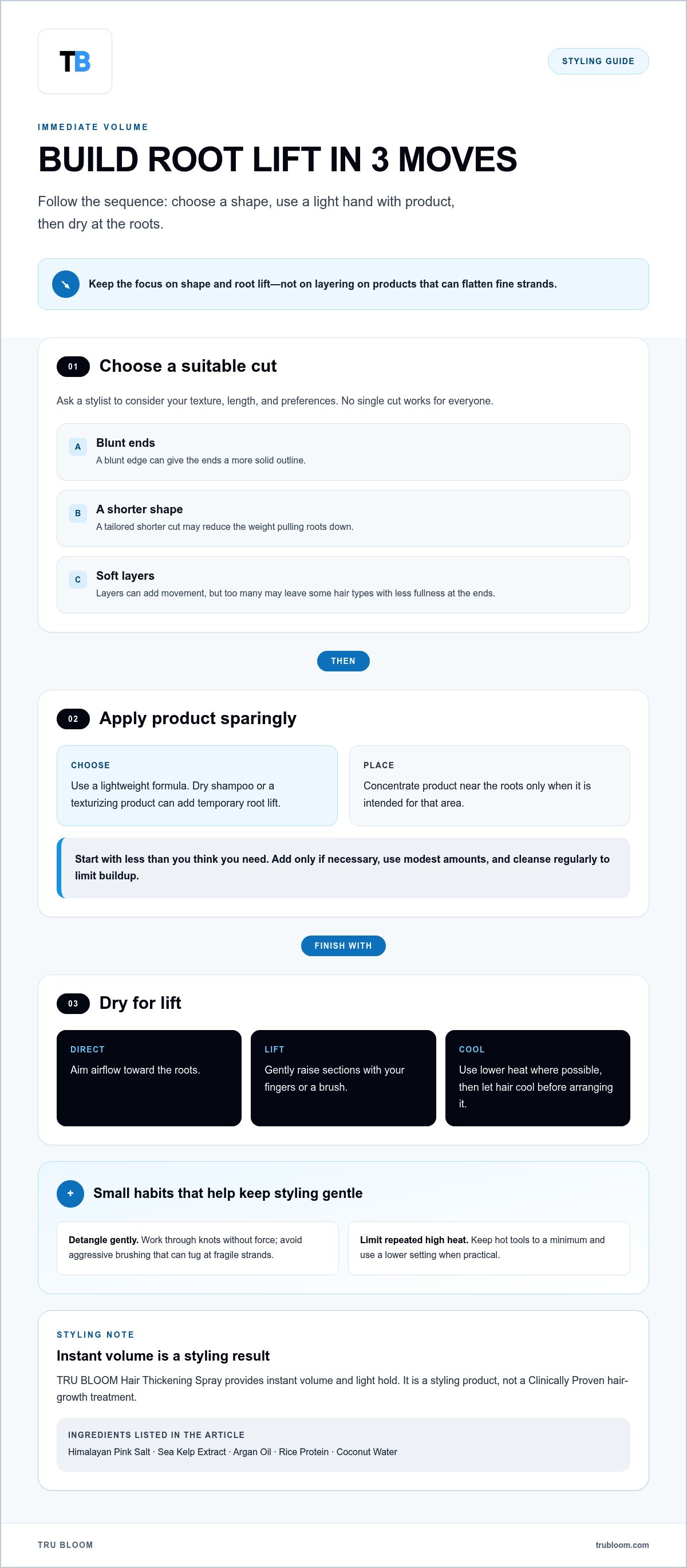
Build volume in sequence: choose a cut that suits your hair, apply a small amount of lightweight styling product, then lift the roots as you dry. This keeps the focus on shape and root lift instead of layering on products that can flatten fine strands.
- Choose a suitable cut. Ask a stylist about blunt ends, a shorter shape, or soft layers based on your hair’s texture, length, and preferences.
- Apply product sparingly. Use a lightweight formula, concentrating it near the roots only when the product is intended for that area. Dry shampoo or a texturizing product can add temporary root lift. Use modest amounts and cleanse regularly to limit buildup.
- Dry for lift. Direct airflow toward the roots and lift sections gently with your fingers or a brush. Use lower heat where possible, and let hair cool before arranging it.
Which styling habits can add lift without weighing hair down?
Start with less product than you think you need, then add only if necessary. Detangle gently, working through knots without force, and avoid aggressive brushing that can tug at fragile strands. Repeated high heat can stress hair, so keep hot tools to a minimum and use a lower setting when practical.
Can a haircut make thin hair seem fuller?
A blunt edge can make the ends form a more solid outline, while a tailored shorter cut may reduce the weight pulling roots down. Soft layers can add movement, but too many layers may leave some hair types with less fullness at the ends. No single cut works for everyone. Discuss your texture, preferred length, and daily styling habits with a stylist before deciding.
TRU BLOOM Hair Thickening Spray provides instant volume and light hold. It is a styling product, not a Clinically Proven hair-growth treatment. The spray contains ingredients including Himalayan Pink Salt, Sea Kelp Extract, Argan Oil, Rice Protein, and Coconut Water, and is non-sticky. For a simple volume option, explore TRU BLOOM Hair Thickening Spray. For hair loss information beyond styling, the American Academy of Dermatology Association explains hair loss treatments from dermatologists.
Build a Gentle Hair-Care Routine for Fine or Thinning Hair
A low-effort routine can reduce avoidable stress on fragile strands. Cleanse your scalp gently, apply conditioner mainly through the mid-lengths and ends if your roots flatten easily, and detangle without tugging. These habits can help limit breakage, but they can’t guarantee increased hair density or regrowth. Hair care and hair growth are different goals.
How can you reduce breakage during everyday styling?
Handle damp hair carefully, since pulling at knots can cause unnecessary tension. Use a wide-tooth comb or a gentle brush, start at the ends, and work upward in small sections. Avoid tight ponytails or other styles that pull persistently at the roots. Keep heat tools to a minimum, choose a lower setting when possible, and let hair air-dry when it suits your routine.
Gentle cleansing, careful conditioning and detangling, looser styles, and less heat are practical habits that help reduce styling stress, not promises of regrowth.
When does thinning call for medical advice?
Routine changes may reduce breakage, but they won’t explain every change in density or shedding. Consult a physician or qualified health provider if hair loss is sudden, persistent, or unexplained, or if you notice new bald spots. A clinician can assess your symptoms and discuss appropriate next steps. Don’t rely on a cosmetic product to treat a medical condition.
Keep the routine manageable: cleanse as needed, condition without weighing down roots, detangle gently, and limit heat. If you’re exploring a distinct hair-growth approach beyond everyday care, explore TRU BLOOM Hair Growth Vitamins.
Choose an Approach: Instant Volume or a Clinically Proven Hair-Growth Routine
Choose based on your goal. For immediate volume, TRU BLOOM Hair Thickening Spray provides volume and light hold. It’s a styling product, not a hair-growth treatment. For a longer-term approach, TRU BLOOM Hair Growth Vitamins are Clinically Proven to grow thicker, fuller, stronger hair within 60 days, with additional results at 90 days. These are product claims, not a guarantee that every person will have the same result.
- Instant styling: Hair Thickening Spray adds volume now.
- Longer-term hair growth: Hair Growth Vitamins have clinical-study evidence.
What does Clinically Proven mean for TRU BLOOM Hair Growth Vitamins?
Only TRU BLOOM Hair Growth Vitamins are Clinically Proven. MS Research et al., 2023 evaluated the vitamins in a large, government-published, gold-standard, double-blind, placebo-controlled study. That evidence distinguishes the vitamins from the Hair Thickening Spray, which isn’t Clinically Proven. It also doesn’t mean every person will have the same result or that the supplement is FDA-approved.
For more on the study and formula, read the TRU BLOOM hair growth vitamins guide. The vitamins are not vegan. The TRU BLOOM team has not observed body-hair growth, and TRU BLOOM states that there are no side effects. If you choose to use the vitamins, take only one capsule per day and do not exceed the recommended dosage.
How can readers explore the TRU BLOOM options?
If you’re not completely satisfied within 100 days, we’ll refund your purchase in full - no questions asked.
For adults only. Do not exceed recommended dosage. If you have a medical condition, are pregnant, nursing, or taking medications, consult with your doctor before using. Keep away from children. Do not use if safety seal is damaged or missing.
*The statements contained herein have not been evaluated by the Food and Drug Administration. The products and information found on this website are not intended to diagnose, treat, cure or prevent any disease… Always seek the advice of your physician or other qualified health provider… Never disregard professional medical advice or delay in seeking it/treatment because of something you have read, viewed, or listened to on this website. If you think you may have a medical emergency, immediately call your doctor or dial 911.*
For details on the available options, explore TRU BLOOM.
Choose Your Next Step with Confidence
Your next step depends on what you want to change. If you want a styling change now, focus on products designed for temporary volume. TRU BLOOM Hair Thickening Spray provides instant volume and light hold, but it is not Clinically Proven for hair growth. For a longer-term hair-growth approach, TRU BLOOM Hair Growth Vitamins are Clinically Proven in a government-published, double-blind, placebo-controlled study. Keep those claims distinct, and weigh any hair-growth product by the evidence behind it.
There’s no need to overhaul your routine all at once. Choose one manageable action, pay attention to how your hair responds, and seek qualified medical advice if you notice unexplained changes in shedding or density. Knowing how to make thin hair look fuller starts with choosing an approach that matches your goal, not chasing every new trend.
Explore TRU BLOOM hair growth options and decide which next step fits your goals. Progress begins with a clear choice, and you can make that choice at your own pace.
Frequently Asked Questions
Can a haircut make thin hair look fuller?
Yes, a suitable cut can create a more compact shape, though results depend on your hair and preferences. To decide how to make thin hair look fuller, consider how the ends sit when your hair is air-dried and styled as usual. Bring that example to your stylist and discuss the upkeep you’re comfortable with before choosing a new length or shape.
What is the difference between fine hair and thinning hair?
Fine hair refers to the width of individual strands; thinning refers to a decrease in hair density or increased shedding. For example, strands may be fine across your head while your overall density stays consistent. A change in your usual part or the amount of hair in a ponytail may be worth tracking, but those observations alone can’t identify a cause.
Can a thickening spray make thin hair look fuller immediately?
Yes. TRU BLOOM Hair Thickening Spray provides instant volume and light hold for a styling effect. It doesn’t increase hair density or treat hair loss, and it isn’t Clinically Proven for hair growth. Use it as a cosmetic styling option for immediate volume, rather than as a substitute for medical advice or a longer-term hair-growth approach.
How long does it take to see results from TRU BLOOM Hair Growth Vitamins?
TRU BLOOM Hair Growth Vitamins are Clinically Proven to grow thicker, fuller, stronger hair within 60 days, with additional results at 90 days. These time frames describe the product claim, not a guarantee that every person will have the same results. Individual outcomes can vary, so follow the recommended use and consult a health professional with questions.
When should I talk to a doctor about thinning hair?
Talk to a doctor or qualified health provider if hair loss is sudden, persistent, or unexplained, or if you notice new bald patches. Before the appointment, note when you first noticed a change and whether shedding or density has shifted over time. That record can help you describe what’s happening; a clinician can assess it and discuss appropriate next steps.


Leave a comment (all fields required)