


Does clarifying shampoo help with hair loss, or is it being asked to solve a problem it can’t reach? If you’ve noticed more strands in the shower, buildup from oils, styling products, or hard water may seem like an obvious culprit. Clarifying shampoo can remove residue, but it doesn’t treat the underlying causes of hair loss. Deep cleansing too often may leave hair dry and more vulnerable to breakage.
The key is separating shedding from breakage. Shedding involves strands that have come away from the scalp, while breakage leaves shorter fragments and uneven ends. This guide explains what clarifying shampoo can and can’t do, how to use it without overdoing it, and when persistent or sudden hair loss calls for qualified medical advice. You’ll learn how to assess whether buildup may be affecting your hair and when to look beyond your wash routine for answers.
Key Takeaways
- Does clarifying shampoo help with hair loss? It removes surface residue and excess oil, but it doesn’t treat the underlying causes of hair loss.
- Follow the shampoo label: wet hair thoroughly, cleanse as directed, and rinse completely instead of relying on a universal schedule.
- Persistent or concerning hair loss calls for qualified medical evaluation, not repeated changes to your shampoo.
- TRU BLOOM Hair Growth Vitamins are a separate hair-growth product option, not a clarifying shampoo or a cure for hair loss.
Does Clarifying Shampoo Help With Hair Loss? The Short Answer
No. Clarifying shampoo removes residue and excess oil from the hair and scalp, but it doesn’t treat the underlying causes of hair loss or make follicles grow new hair. The useful distinction is between cleaning the hair’s surface and addressing what’s happening at the follicle. Clarifying shampoos cleanse more deeply than everyday shampoos, helping lift product residue and some buildup.
Hair shedding versus breakage: why the difference matters
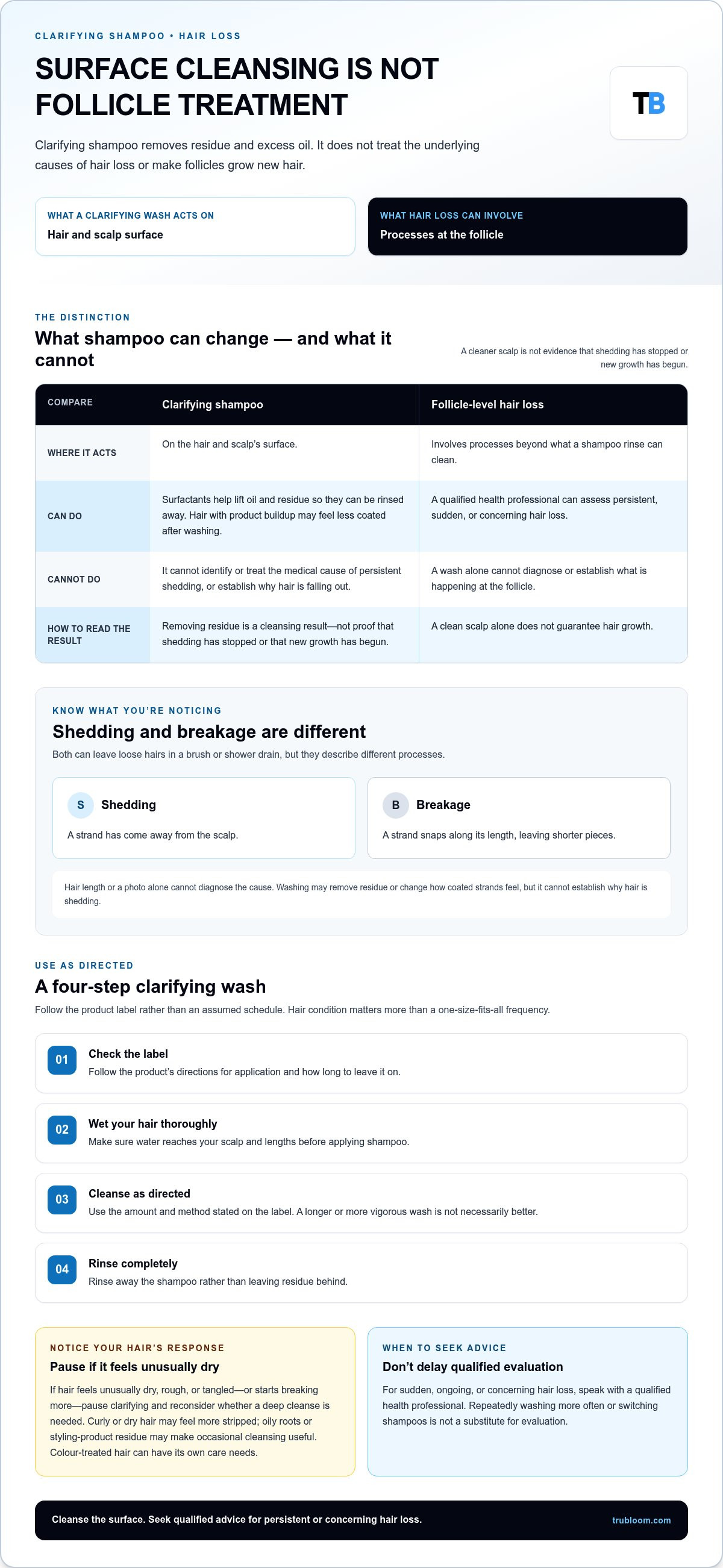
Shedding means a strand has come away from the scalp. Breakage happens when a strand snaps along its length, leaving shorter pieces. Both can add loose hairs to a brush or shower drain, but they are different processes. Washing may remove residue or change how coated the strands feel; it can’t establish why hair is shedding. Hair length or a photo alone can’t diagnose the cause, so don’t treat either as proof of what’s happening at the follicle.
What clarifying shampoo can realistically change
Surfactants help shampoo lift oil and residue so they can be rinsed away. As a general overview explains, shampoo cleans hair through ingredients that remove oil and contaminants. After clarifying, hair with noticeable product buildup may feel less coated. That’s a cleansing result, not evidence that shedding has stopped or new growth has begun.
Clarifying shampoo changes what’s on the strands and scalp, not the cause of follicle-level hair loss. A clean scalp alone doesn’t guarantee hair growth. If you’re seeing persistent shedding, repeated deep washes aren’t a substitute for understanding its cause.
How Clarifying Shampoo Works, and What It Cannot Do for Hair Loss
Clarifying shampoo acts on the hair and scalp’s surface. Hair loss can involve processes at the follicle, beyond what a wash can clean. Surfactants help lift oil and residue so water can rinse them away. This can clear product buildup, but it can’t identify or treat the medical cause of persistent shedding.
Surface cleansing: Removes or loosens oil and residue on hair and scalp.
Follicle-level changes: Involve processes that a shampoo rinse cannot diagnose or establish.
Buildup on the hair and scalp is not the same as hair loss
Styling products and excess oil can accumulate and weigh strands down. That residue may affect how hair feels or moves, but its presence doesn’t prove it caused hair to shed from the follicle. A wash can remove residue; it can’t show whether that residue explains hair loss. Don’t assume that a coated scalp or strands mean buildup is the cause of shedding.
Why deep cleansing is not a hair-growth treatment
Cleaning the hair shaft is different from addressing a hair-growth concern. A clarifying wash doesn’t establish why shedding is happening, and claims that it directly triggers regrowth need credible evidence. Be cautious of before-and-after claims crediting a clarifying shampoo with new growth without evidence that the result came from an assessed cause and treatment.
So, does clarifying shampoo help with hair loss? It can remove surface buildup, but that isn’t evidence it changes the hair-growth cycle or treats persistent shedding. Hair-growth products are a separate category. If you’re exploring that option, learn about TRU BLOOM Hair Growth Vitamins separately from shampoo.
How to Use Clarifying Shampoo Without Unnecessary Dryness or Breakage
Use clarifying shampoo as directed on its label rather than following an assumed schedule. Oily roots, dry lengths, curls, and colour-treated hair can respond differently to deep cleansing. Your hair’s condition matters more than a one-size-fits-all frequency from a general guide. If strands feel drier or start breaking more, don’t respond by clarifying more often.
- Check the label. Follow the product’s directions for application and how long to leave it on.
- Wet your hair thoroughly. Make sure water reaches your scalp and lengths before applying shampoo.
- Cleanse as directed. Use the amount and method stated on the label; don’t assume a longer or more vigorous wash will work better.
- Rinse completely. Clear away the shampoo instead of leaving residue behind.
Adjust use to your hair’s condition
Notice how your hair responds after washing. If it feels unusually dry, rough, or tangled, pause clarifying and reconsider whether your hair needs a deep cleanse. Curly or dry hair may be more prone to feeling stripped, while oily roots or styling-product residue may make occasional cleansing useful. Colour-treated hair can have its own care needs. None of these traits alone determines a required schedule.
When to stop experimenting and seek advice
Clarifying shampoo can’t explain persistent shedding. If hair loss is sudden, ongoing, or concerning, speak with a qualified health professional rather than trying increasingly frequent washes or repeatedly switching shampoos. Don’t let shampoo experimentation delay that conversation. A professional can assess your concerns; shampoo instructions can only guide cleansing.
If you’re exploring a separate hair-growth product category, explore hair-growth information and keep that decision distinct from your shampoo routine.
When Hair Loss Needs More Than Clarifying Shampoo
If hair loss is persistent, sudden, or concerning, repeated shampoo changes aren’t a substitute for qualified evaluation. A health professional can assess your concerns and help determine appropriate next steps. Clarifying shampoo can cleanse, but it can’t identify the reason for ongoing hair loss.
A separate option for readers exploring hair-growth products
TRU BLOOM Hair Growth Vitamins are a separate product, not a clarifying shampoo or a cure for hair loss. The vitamins were studied in a government-published, double-blind, placebo-controlled study. They are Clinically Proven to grow thicker, fuller, stronger hair within 60 days, with additional results at 90 days. These are product claims, not a guarantee of an individual result. The Clinically Proven claim applies to the vitamins, not to the Hair Thickening Spray.
Keep product information transparent and medically responsible
The dosage is one capsule per day. The vitamins are not vegan, and there are no side effects. The TRU BLOOM team has not observed body-hair growth.
For adults only. Do not exceed recommended dosage. If you have a medical condition, are pregnant, nursing, or taking medications, consult with your doctor before using. Keep away from children. Do not use if safety seal is damaged or missing.
If you’re not completely satisfied within 100 days, we’ll refund your purchase in full - no questions asked.
The statements contained herein have not been evaluated by the Food and Drug Administration. The products and information found on this website are not intended to diagnose, treat, cure or prevent any disease… Always seek the advice of your physician or other qualified health provider… Never disregard professional medical advice or delay in seeking it/treatment because of something you have read, viewed, or listened to on this website. If you think you may have a medical emergency, immediately call your doctor or dial 911.
For persistent hair loss, seek qualified medical advice rather than relying on a wash or supplement alone. Explore TRU BLOOM Hair Growth Vitamins.
Choose Your Next Step With Confidence
Your next step should fit your concern. If hair loss is persistent, sudden, or worrying, prioritize a conversation with a qualified health professional instead of continuing to experiment with shampoos. Clarifying shampoo has a clear limit: a wash can’t tell you what’s causing ongoing changes.
If you’re exploring hair-growth products separately, TRU BLOOM Hair Growth Vitamins are Clinically Proven and were studied in a government-published, double-blind, placebo-controlled study. That product evidence is not a diagnosis, a cure, or a promise of an individual result. Keep medical guidance at the center of decisions about persistent hair loss, and assess products on their own evidence and instructions.
Explore TRU BLOOM Hair Growth Vitamins as one option to consider. Take a measured next step without expecting shampoo to do a job it wasn’t designed to do. Clear information and qualified advice can help you move forward with confidence.
Frequently Asked Questions
Can clarifying shampoo cause hair loss or breakage?
Clarifying shampoo isn’t a treatment for hair loss, but dryness or rough handling during washing can contribute to breakage. If you notice more short, snapped strands after washing, stop or reduce use and check the product directions. That doesn’t establish the cause of shedding from the scalp. If hair loss continues or concerns you, seek advice from a qualified health professional rather than assuming shampoo is responsible.
Does clarifying shampoo remove hard-water buildup from hair?
Some clarifying shampoos may help remove residue associated with hard water, but formulas differ, and a deep cleanser shouldn’t be assumed to remove every mineral deposit. Check the product label for what it’s intended to cleanse. If your hair still feels coated after using it as directed, avoid repeated washes in quick succession. More cleansing isn’t proof that water-related residue is gone.
Is clarifying shampoo safe for colour-treated or curly hair?
It depends on the specific formula and your hair’s condition. A deep cleanser may leave colour-treated hair or naturally dry curls feeling rougher, so check the label for guidance on colour-treated hair before use. If the directions don’t address your hair type, try a small section first and observe how it responds. Stop if you notice unwanted dryness, tangling, or colour changes.
How often should you use clarifying shampoo?
There isn’t one schedule that fits every scalp, hair type, and product. Follow the instructions on your shampoo rather than adopting a frequency from a general online guide. For example, someone who uses several styling products may have different cleansing needs from someone with dry, curly hair and little product residue. If each wash leaves your hair drier or more tangled, reassess use instead of increasing it.
When should you see a doctor about hair loss?
See a qualified health professional if hair loss is sudden, persistent, worsening, or concerning to you. Don’t wait for a shampoo change to explain it, and don’t try to diagnose the cause from loose strands alone. Shampoo can’t assess your health. A professional can evaluate your concern and advise on appropriate next steps.


Leave a comment (all fields required)