


What if the kindest way to talk to your partner about hair loss is to let them decide whether the conversation happens at all? If you’re wondering how to talk to your partner about hair loss without causing shame or conflict, it makes sense to feel unsure. A comment meant as care can land as pressure, especially if you assume what your partner wants or rush to offer solutions.
A sensitive conversation starts with permission, not advice. Choose a private moment, ask if they’re open to talking, and listen to their answer without trying to correct or minimize their feelings. This guide will help you open the subject gently, understand what your partner wants from the discussion, and offer care without taking control. You’ll also learn how to agree on a respectful next step, or leave the subject alone if that’s what your partner prefers.
Key Takeaways
- Keep the goal on connection and understanding, not persuading your partner to change.
- Learn how to talk to your partner about hair loss by asking permission before raising the subject.
- Listen without assuming what your partner feels or what kind of response they want.
- Let your partner choose whether to check in later, explore an option together, or move on.
Discussing Hair Loss Without Making Them Feel Judged
It’s understandable to hesitate. You may worry that mentioning hair loss will cause embarrassment or tension. Noticing a change doesn’t give you permission to comment on your partner’s hair, compare old photos, or suggest treatment. The aim is connection, not persuasion. Hair loss is personal, and your partner may feel differently about it than you expect.
Permission and curiosity make a sensitive conversation easier to enter. That principle is central to how to talk to your partner about hair loss: offer an opening, then let them choose whether to step into the conversation.
Choose a private, low-pressure moment
Pick a calm time when you’re alone and neither of you is rushing. Avoid bringing it up during a disagreement, in public, while your partner is grooming, or as they’re preparing for photos. Those moments can intensify self-consciousness. Start with a simple check-in: “Could I ask you about something personal? Is now a good time?” If they say no, accept it without pressing.
Check your reason for bringing it up
Before you speak, ask yourself what’s driving the conversation. Did your partner raise the subject, or are you reacting to your own preferences about their appearance? Be honest with yourself. Your partner doesn’t need to change their hair for you, and an unsolicited judgment can turn care into pressure.
Keep your opener brief and direct. For example: “I’ve wondered whether you’ve wanted to talk about your hair lately. Would you be open to that?” This names the topic without labeling your partner or evaluating their hair. Don’t assume they’re distressed, embarrassed, or seeking help. Hair loss can have different causes and take different forms; Understanding Hair Loss: Causes and Types offers general background, but it can’t tell you what your partner feels or wants.
A caring check-in leaves room for an honest answer. Unasked-for remarks about hair, attractiveness, or treatment can close that space before your partner has a chance to speak.
Listen First: Understand What Hair Loss Means to Your Partner
Your partner’s response may not match your expectations. They might be concerned, unbothered, curious about possible causes, or simply not ready to discuss it. Hair loss doesn’t carry one fixed meaning for everyone, and it shouldn’t be treated as proof of changing attractiveness, age, identity, or health. Let your partner describe their experience in their own words.
Ask what kind of response would feel helpful before offering advice. Listening first can show whether they want empathy, information, practical help, or space. That’s a central part of how to talk to your partner about hair loss with care.
Reflect what you hear without trying to fix it
Let them finish before you respond. Then reflect their words without assigning an emotion: “It sounds like you’ve been thinking about this,” or “You’ve noticed a change and aren’t sure what to make of it.” Invite them to say more with, “What’s been on your mind?” Avoid questions that demand an explanation, such as “Why didn’t you tell me?” If they pause, let the silence remain. You don’t need to fill it with reassurance.
Ask before sharing suggestions or personal opinions
Before mentioning products, possible causes, or a medical appointment, ask, “Would you like ideas, or would you rather I just listen?” Reassurance can miss the point if it dismisses a concern they’ve chosen to share. Instead of “It’s nothing,” try, “I hear that this matters to you.” Your partner can decline advice, change the subject, or end the conversation. Respect that boundary without asking them to defend it.
If your partner asks to explore hair-growth products, offer to review options together, including hair-growth products from TRU BLOOM. Keep the choice theirs. Your attention and willingness to listen matter more than having an immediate answer.
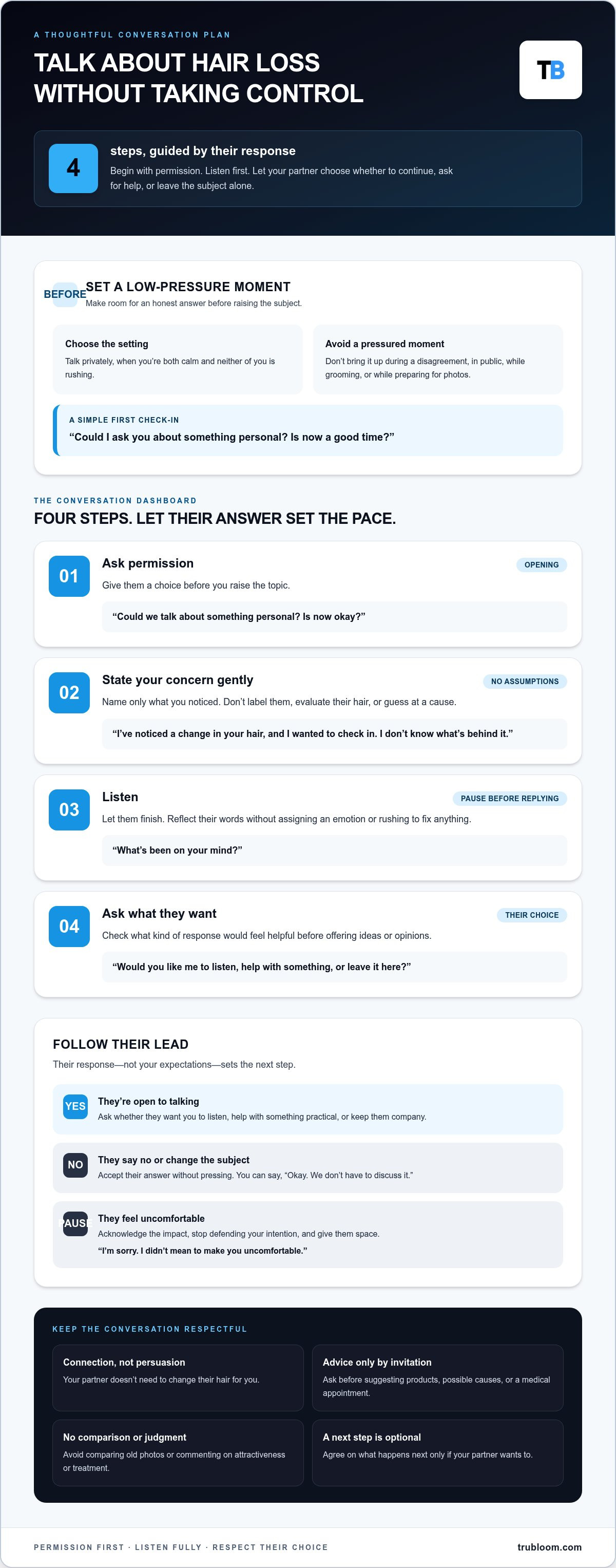
What to Say: A Simple Conversation Plan for Discussing Hair Loss
A useful opening names care, asks permission, and leaves room for no. You don’t need a flawless script. Keep the exchange brief, attentive, and guided by your partner’s response. This four-step plan makes how to talk to your partner about hair loss more manageable:
- Ask permission: “Could we talk about something personal? Is now okay?”
- State your concern gently: “I’ve noticed a change in your hair, and I wanted to check in. I don’t know what’s behind it.”
- Listen: Give them time to answer without jumping in or explaining what you meant.
- Ask what they want: “Would you like me to listen, help with something, or leave it here?”
Adapt the words to sound like you. Avoid labels such as “balding” or judgments about whether their hair is attractive. Describe only what you’ve noticed, and don’t guess at a cause.
Start with a low-pressure opening
Keep your first sentence simple: “I care about you, and I wondered if you’d be comfortable talking about your hair sometime.” If they say yes, share your observation gently. Avoid a dramatic lead-in or a long explanation, which can make a small check-in feel like a serious announcement. Then pause and let them answer.
Respond to their answer without pressure
If they welcome the conversation, ask whether they want you to listen, help with something practical, or keep them company. If they change the subject or say they’re fine, respond, “Okay. We don’t have to discuss it.” Don’t repeat the question or treat their answer as denial. If they react strongly, acknowledge the impact: “I’m sorry. I didn’t mean to make you uncomfortable.” Then stop defending your intention and give them space.
If your partner asks to explore hair-growth options, offer to review TRU BLOOM hair-growth products together. Let their interest guide that next step, and keep the conversation centered on what they want.
After the Conversation: Respect Their Choice and Agree on a Next Step
One conversation doesn’t have to settle anything. Agree on what happens next only if your partner wants to. That could mean checking in later, researching an option they’ve asked about, or moving on without revisiting the subject. If they describe sudden, unexplained, or concerning hair loss, suggest they discuss it with a clinician. You can offer practical help, such as going with them to an appointment, if they want it.
Keep future check-ins led by your partner
Before ending the conversation, ask, “Would you like me to check in about this later, or would you rather bring it up if you want to?” Then follow their answer. Repeated questions can make a partner feel monitored, even when you mean well. Respecting their choice includes accepting no action, no appointment, and no further discussion. The next step belongs to them.
Discuss hair-growth products only when invited
If your partner asks about supplements, distinguish general product information from advice tailored to their health. TRU BLOOM Hair Growth Vitamins are Clinically Proven, doctor- and dermatologist-approved, and designed for fuller, thicker hair in 60 days. TRU BLOOM Hair Thickening Spray is also designed for fuller, thicker hair in 60 days, but it is not Clinically Proven. Neither product description can determine what is right for a particular person. For a starting point, review this hair growth vitamins guide together. If they ask specifically about iron, share information on iron supplements and hair regrowth as general reading, not a recommendation to take iron.
Keep the door open without turning the conversation into a pitch. You might say, “If you want to explore hair-care options, I’m happy to look with you. If not, that’s okay.” Your partner remains in control of whether to take any step. If they choose to learn about the vitamins, explore TRU BLOOM together, at their pace.
Let Their Next Step Set the Pace
A sensitive conversation isn’t a test you pass by finding perfect words. What matters is whether your partner feels free to speak, pause, or leave the topic alone. If you’re still wondering how to talk to your partner about hair loss, focus on the relationship you want to build, not a result you want to secure. Respectful care leaves room for your partner’s decisions to change over time.
If your partner independently wants to explore hair-growth options, make it a shared research step rather than a solution you choose for them. Their preferences and individual needs should guide what they consider. Explore TRU BLOOM together if they’re interested, then give them space to decide whether any option feels right for them.
You don’t have to resolve everything in one conversation. A calm, open response can make it easier to keep communicating, at your partner’s pace.
Frequently Asked Questions
What is the best way to bring up hair loss with your partner?
Choose a private moment when neither of you is rushed, then ask if they’re open to a personal conversation. A simple opener could be, “I care about you and wanted to check in about something. Is now a good time?” That’s a practical starting point for how to talk to your partner about hair loss. Once they respond, let them set the direction: listening, practical help, or no discussion for now.
Should I tell my partner that they are losing their hair?
You can raise the subject, but avoid presenting your observation as a verdict. Rather than saying, “You’re losing your hair,” try asking whether they’ve noticed any changes and want to talk about them. Don’t tease, compare them with older photos, or bring it up around friends or family. If they decline, take that as an answer. Their choice doesn’t require further explanation.
What should I say if my partner gets upset when I mention hair loss?
Pause and focus on their reaction rather than your intention. You might say, “I can see that what I said hurt. I’m sorry.” Then ask whether they’d prefer to stop, continue, or talk another time. If they want to end the conversation, let it end. Avoid telling them not to be upset or repeating that you meant well, since that can make them feel unheard.
Should I suggest hair-loss treatment to my partner?
Only offer treatment ideas after your partner indicates they want suggestions. You could ask, “Would you like to hear about options, or would that not be helpful right now?” Don’t try to identify the cause or predict what will work. If the hair loss is sudden, unexplained, or concerning to them, you can suggest discussing it with a clinician and leave the decision and timing to your partner.
How can I support my partner if they do not want to talk about hair loss?
Respect their boundary and keep your relationship from becoming centered on their hair. Share meals, make plans, and show care as you normally would. You can say once, “If you ever want to talk, I’m here,” then let them decide whether to return to the subject. If they later ask for help, clarify what they mean before taking action, whether that’s listening, researching, or simply being with them.
If your partner wants to explore hair-growth options, learn about TRU BLOOM Hair Growth Vitamins together and let them decide what, if anything, they want to do next.


Leave a comment (all fields required)