


Fine hair and thinning hair aren’t the same problem, and treating them as one can leave you chasing volume that won’t last. If you’re asking how to thicken fine thin hair, start by separating strand size from hair density. Fine strands can fall flat even when density hasn’t changed; a gradual drop in density may call for a different response.
It’s frustrating when a style loses its body hours later, especially when product promises blur the difference between quick styling volume and growth-focused options. The right approach depends on what’s happening with your hair and what you want to change.
This guide covers practical styling habits for immediate volume, ways to limit breakage, and signs that a change in density deserves professional evaluation. You’ll also learn how TRU BLOOM Hair Thickening Spray and Hair Growth Vitamins fit into different hair goals.
Key Takeaways
- To learn how to thicken fine thin hair, match your approach to your goal: styling can add body now, while growth-focused options take longer.
- Build a light routine: cleanse gently, keep conditioner on mid-lengths and ends if roots get weighed down, and dry with lift.
- TRU BLOOM Hair Thickening Spray is a cosmetic styling option, not a Clinically Proven treatment.
- TRU BLOOM Hair Growth Vitamins are Clinically Proven; a noticeable change in hair density deserves professional evaluation.
How to Thicken Fine, Thin Hair: First Identify What Is Making It Look Sparse
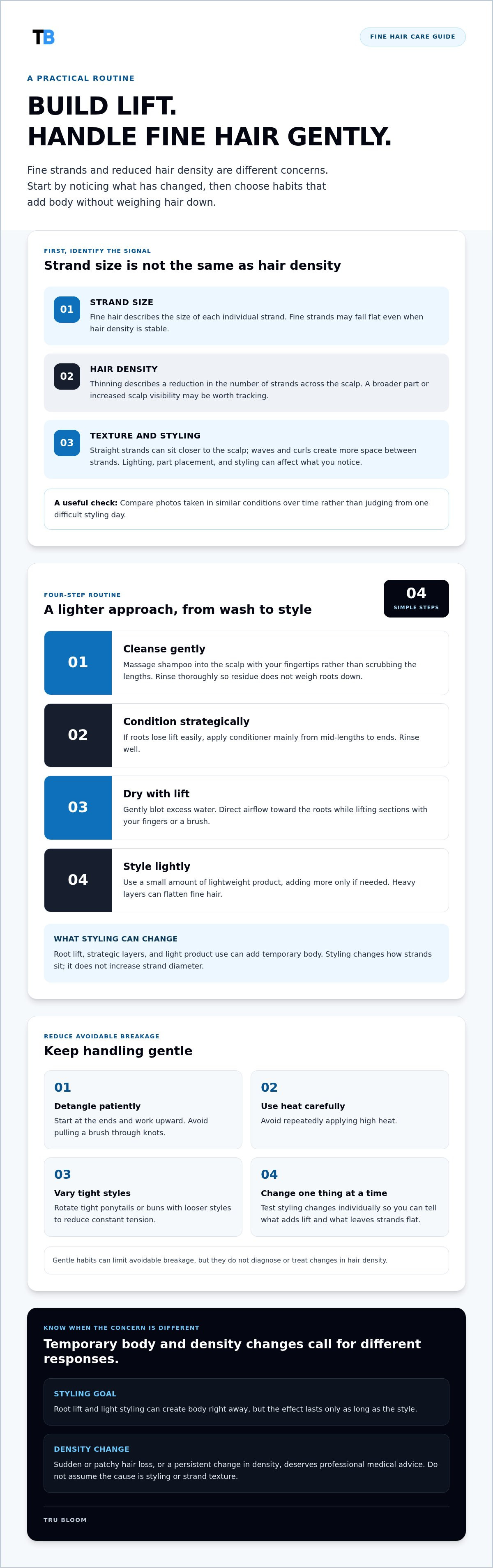
Fine hair describes the size of each strand; thinning hair describes a reduction in the number of strands across the scalp. They can occur separately or together. Fine strands may have less natural lift even when density is stable, while thinning can make the scalp more visible even if individual strands are coarse.
Texture adds another clue. Straight strands often sit closer to the scalp, while waves and curls create more space between strands. To understand how to thicken fine thin hair, notice what has changed: strand texture, scalp visibility, or the width of your part. For basic context on hair structure and growth, consider how the strand itself differs from the amount of hair growing across the scalp.
Fine hair or thinning hair: how can you tell the difference?
Look at a single strand against a contrasting background to assess its thickness. Then assess density across the scalp, especially along your part and at the temples. A broader part or increased scalp visibility may be worth tracking, but lighting, part placement, and styling can affect what you notice. Compare photos taken in similar conditions over time rather than drawing conclusions from one difficult styling day.
When does a change in hair density need attention?
Sudden or patchy hair loss, or a persistent change in density, deserves professional medical advice. A clinician can assess what’s happening; don’t assume the cause is styling or strand texture. Hair products may add temporary body, but they can’t explain why density has changed. Growth-related concerns need a different approach from day-to-day volume, and supplements aren’t a substitute for medical evaluation.
Once you’ve identified whether strand size, density, or both are driving your concern, you can choose your next steps more clearly. Styling can add lift today. A lasting change in density calls for closer attention to what’s happening over time.
What Actually Makes Fine Hair Seem Thicker, and What Takes Longer?
Understanding how to thicken fine thin hair starts with separating a quick styling effect from a change in hair growth. Root lift, strategic layers, and lighter product use can add temporary body. Cosmetic products can coat or shape strands, but they don’t change each strand’s underlying diameter. Growth-focused options have a different purpose and take time. Hair changes gradually, and individual results vary.
Can styling change hair thickness?
Styling changes how strands sit, not the hair growth cycle. Lift at the roots can create height, while strategic layers can reduce a heavy, flat shape. Use lightweight products sparingly: too much can weigh fine strands down and cancel out volume. These techniques can make a difference right away, but the effect lasts only as long as the style.
How do hair growth and strand breakage affect density?
Each follicle produces a hair shaft, the strand you can see. Hair cycles through growth, transition, and resting phases, so changes in length and density aren’t immediate. Breakage is different: a strand can snap before reaching its full length, reducing retained length and leaving the ends less full, even without a change in follicle activity.
Immediate volume: Root lift, layering, and light styling products change how hair sits. Effects are temporary and don’t increase strand diameter.
Longer-term hair-growth goals: Growth-focused options address a different concern. Changes happen gradually, so they aren’t a same-day styling fix.
Choose based on the outcome you want: more body today, less breakage over time, or attention to a persistent density change. TRU BLOOM Hair Thickening Spray is a cosmetic option, while TRU BLOOM Hair Growth Vitamins are Clinically Proven. Explore TRU BLOOM hair growth options as you consider longer-term goals.
How to Thicken Fine Hair with a Practical Care and Styling Routine
A consistent routine can add lift while helping fine strands retain their length. Start with the basics, then adjust based on how your hair responds. To learn how to thicken fine thin hair day to day, focus on gentle handling and use only enough product to achieve your style.
- Cleanse gently. Massage shampoo into the scalp with your fingertips rather than scrubbing the lengths. Rinse thoroughly so residue doesn’t weigh roots down.
- Condition strategically. Apply conditioner mainly from mid-lengths to ends if your roots lose lift easily. Rinse well.
- Dry with lift. Gently blot excess water, then direct airflow toward the roots as you lift sections with your fingers or a brush.
- Style lightly. Use a small amount of lightweight product, adding more only if needed. Heavy layers of product can flatten fine hair.
Which styling choices add body without weighing hair down?
Direct the dryer at the roots while lifting sections, and keep styling products light and measured. A cut with strategic layers may add movement, but the right choice depends on your texture, cut, and styling preference. Test one change at a time so you can tell what adds lift and what leaves strands flat.
How can you reduce breakage in fine hair?
Detangle gently, starting at the ends and working upward. Avoid pulling a brush through knots, and use heat carefully rather than repeatedly applying high heat. Rotate tight ponytails or buns with looser styles to reduce constant tension. These habits help limit avoidable breakage, though they don’t diagnose or treat changes in hair density.
Quick routine check: Cleanse gently. Condition the lengths. Lift roots while drying. Keep product light. Detangle with care. Choose styles that don’t pull.
For growth-focused goals, TRU BLOOM Hair Growth Vitamins are Clinically Proven and doctor- and dermatologist-approved. Learn more about Hair Growth Vitamins as one option to consider alongside a gentle daily routine.
Choosing a Hair-Thickening Approach: Styling Volume, TRU BLOOM Products, and Next Steps
The right choice depends on what you want to change. If your priority is more body for a style today, focus on styling techniques or a cosmetic thickening product. If you’re focused on hair growth, consider a growth-focused option and allow for gradual change. You can choose both, since immediate styling volume and longer-term goals aren’t mutually exclusive.
What is the difference between a thickening spray and hair growth vitamins?
TRU BLOOM Hair Thickening Spray is a cosmetic hair-thickening option and is not Clinically Proven. TRU BLOOM Hair Growth Vitamins are Clinically Proven, doctor- and dermatologist-approved. The products have different purposes, and the vitamins’ evidence claim applies only to the vitamins, not the spray. Individual results vary.
If you’re weighing the vitamins as part of a longer-term plan, review TRU BLOOM hair growth options and consider how they fit your goal. TRU BLOOM also offers a 100-day risk-free money-back guarantee.
How can you choose a realistic next step?
Ask yourself what matters most right now: styling volume, a growth-focused approach, or a combination. If your concern is mainly flat roots, begin with styling and a cosmetic thickening option. If you’re pursuing hair growth, choose a growth-focused approach rather than expecting a styling product to change density. If you’re unsure, distinguish temporary body from gradual growth to clarify what you want to address.
Make your next step specific: choose your goal, then select the approach that matches it. Explore TRU BLOOM hair products to compare the options.
Choose One Clear Next Step
Your hair plan should fit your real routine, not demand a complete overhaul. Pick one change you can maintain, then give yourself time to assess whether it suits your strands and styling habits. A simple, consistent approach is easier to adjust than several new products or techniques at once.
Start by naming your priority: more volume for styling, a growth-focused goal, or a combination. Then make your next move match that priority. If you’re still deciding how to thicken fine thin hair, keep the distinction clear: cosmetic styling and growth-focused products have different purposes. Choose deliberately, and revisit your plan if your needs change.
Explore TRU BLOOM hair products to choose an option that aligns with your goal. Make one informed choice, build a routine around it, and take the next step with confidence.
Frequently Asked Questions
Can you make fine hair thicker naturally?
Natural care can’t reliably change the diameter your follicles produce, but it can help reduce breakage and preserve length. Detangle from the ends upward, avoid pulling through knots, and vary tight hairstyles rather than wearing them every day. These habits won’t change your growth pattern. If you notice a persistent change in density, seek medical advice instead of relying on home remedies alone.
How can I add volume to fine, thin hair at home?
For quick lift, try changing your part or placing root clips near the crown while hair dries. Once you remove them, arrange the roots with your fingers instead of adding several layers of product. If your style loses shape by midday, a small restyle at the roots may work better than applying more product over the lengths.
Does hair thickening spray make hair grow?
No. A hair thickening spray is a cosmetic styling product, not a hair-growth treatment. It can add temporary body to strands, but it doesn’t make follicles produce new hair or change the growth cycle. If your goal is to address a change in density rather than style flat roots, consider growth-focused options and seek medical advice for persistent hair loss.
Can vitamins make thin hair thicker?
Vitamins may help when hair changes are related to a nutritional deficiency, but taking extra vitamins won’t necessarily increase hair density or strand diameter. A balanced diet is a sensible starting point; don’t assume a supplement will address every cause of thinning. TRU BLOOM Hair Growth Vitamins are Clinically Proven. If you’re considering vitamins for hair growth, consult a healthcare professional about your individual needs.


Leave a comment (all fields required)