


Hair thinning after menopause isn’t automatically a vitamin problem. Hormonal changes can shift the balance between estrogen and androgens, contributing to female pattern hair loss. A nutrient deficiency or another health factor may also play a role. If you’re researching hair thinning after menopause vitamins, first consider which causes fit your situation and whether a deficiency has been identified.
It’s understandable to want a clear answer when claims about biotin, iron, vitamin D, and other nutrients compete for attention. But taking more isn’t always better, and supplements may not address thinning driven by hormones or another cause. This guide explains how menopause-related pattern changes can differ from other causes, when a clinician’s assessment or nutrient testing may be useful, and what to consider when comparing vitamins and minerals. You’ll have a practical way to decide whether supplementation makes sense instead of relying on a one-size-fits-all promise.
Key Takeaways
- Note whether changes involve gradual thinning, increased shedding, or patchy loss. The pattern can help guide what to discuss with a clinician.
- Hair thinning after menopause vitamins are worth considering when a deficiency is confirmed, not simply because a nutrient is marketed for hair.
- Before taking a supplement, compare ingredient amounts across products and review warnings and possible medication interactions with a clinician or pharmacist.
- Assess evidence for the specific product formula. A claim about one supplement doesn’t establish that every hair vitamin has the same evidence.
Why Hair Thinning After Menopause Happens, and When Vitamins May Matter
Noticing thinner hair after menopause can be unsettling, especially when it’s hard to tell whether you’re shedding more or gradually losing density. The pattern offers useful clues, but it can’t identify the cause by itself. Gradual thinning means less density over time, sometimes with a widening part. Increased shedding means more hairs than usual come out across the scalp. Patchy loss creates distinct areas with less or no hair.
Timing alone isn’t a diagnosis. The American Academy of Dermatology notes that hair loss has multiple possible causes, and an evaluation may include medical history, scalp examination, and tests when appropriate. Menopause may coincide with thinning, but nutrition, health conditions, medications, and other factors can also play a role. That’s why hair thinning after menopause vitamins shouldn’t be chosen based on timing alone.
What changes can coincide with menopause?
Hormonal shifts during and after menopause can contribute to gradual changes in hair density and growth patterns. Female pattern hair loss often develops slowly, with thinning concentrated around the top of the scalp or a widening part. The Female Pattern Hair Loss (FPHL) overview describes this common pattern. It isn’t the only explanation: a deficiency or another health factor may be involved, and vitamins won’t correct every cause.
When does hair thinning need medical assessment?
Arrange a prompt clinical discussion if loss is sudden, clearly patchy, rapidly worsening, or accompanied by scalp pain, itching, redness, or other new symptoms. A clinician can review your health history, examine your scalp, and decide whether tests for potential contributors, such as nutrient deficiencies or thyroid problems, are relevant. Testing can help distinguish a deficiency that may benefit from correction from hair changes with another cause. Don’t use high-dose supplements as a substitute for finding out what’s driving the change.
Which Vitamins Matter, and Do They Help Without a Deficiency?
A confirmed deficiency is different from taking extra nutrients in the hope of changing hair growth. Correcting a shortfall may address one factor contributing to hair loss. When nutrient levels are adequate, extra intake has no established universal hair benefit. No single vitamin is a universal fix for postmenopausal thinning. The Kaiser Permanente: Hair Loss and Menopause overview also notes that hormonal changes are one possible influence, not the only explanation.
Which nutrient deficiencies may warrant investigation?
A clinician may consider testing based on your symptoms, diet, health history, medications, or pattern of loss. Iron deficiency can contribute to hair loss, but don’t start iron without clinical guidance. After menopause, the recommended iron intake is 8 mg daily, according to the research cited for this article. That amount is a general nutrition reference, not a hair-loss treatment.
Vitamin D, B12, and zinc deficiencies can affect health, but evidence that extra amounts improve hair in people with adequate levels is limited. Biotin deficiency is uncommon, and evidence for biotin supplements in people without a deficiency is weak. The NIH lists an adequate intake of 30 mcg of biotin daily for adults. Testing should reflect your individual circumstances, not a supplement label.
Why more vitamins do not automatically mean more hair growth
Supplements won’t correct hormonal or genetic hair loss, medication-related shedding, or other medical causes. Excess intake can also be harmful: the adult upper limit is 40 mg daily for zinc and 100 mcg (4,000 IU) for vitamin D, according to the National Institutes of Health. These limits include intake from all sources and aren’t personal dosing targets. Check with a clinician or pharmacist before using high-dose products, especially alongside medication or other supplements.
Once you’ve clarified what’s relevant to your situation, compare the ingredients in TRU BLOOM Hair Growth Vitamins with your needs and the evidence for the product.
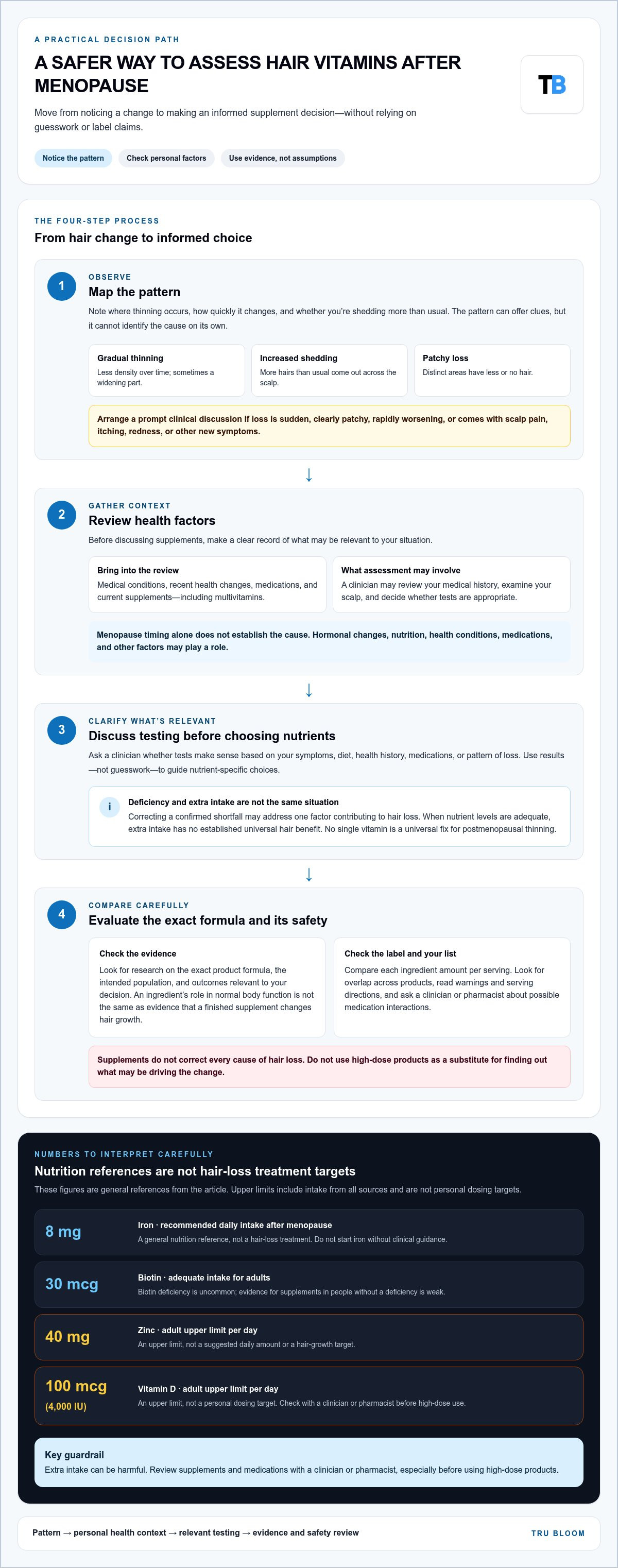
How to Choose and Use Hair Vitamins Safely After Menopause
Choose a supplement based on your situation, not the boldest label claim. This four-step process can help you make a practical, evidence-informed decision.
- Assess the pattern. Note where thinning occurs, how quickly it’s changing, and whether you’re shedding more than usual.
- Review health factors. List medical conditions, recent health changes, medications, and current supplements.
- Discuss testing. Ask a clinician whether your history or symptoms make nutrient tests relevant. Use results, not guesswork, to guide nutrient-specific choices.
- Evaluate the evidence. Check whether research studied the exact formula, the intended population, and outcomes relevant to your decision.
A practical checklist before starting a supplement
Bring your medication and supplement list, including multivitamins, to a clinician or pharmacist. Compare the amount of each ingredient per serving, then check for overlap. Two products may contain the same nutrient, adding up to more than you intended. Read warnings and serving directions, and ask about possible medication interactions. Test results and personal health circumstances matter: a nutrient that’s appropriate for one person may be unnecessary or unsuitable for another.
How to assess claims without expecting a quick fix
An ingredient’s role in normal body function isn’t the same as evidence that a finished supplement changes hair growth. Check the study details: the product formula, participant characteristics, comparison method, duration, and measured outcomes. Those details help you judge whether the evidence applies to the product and your situation.
A product-specific clinical study can provide evidence about the formula and outcomes tested, but it can’t guarantee the same result for every person or establish an untested timeline. Evidence from one formula shouldn’t be assumed to apply to another. When weighing hair thinning after menopause vitamins, review the evidence rather than stacking products or expecting rapid change. Explore TRU BLOOM Hair Growth Vitamins and assess the formula against these criteria.
A Thoughtful Next Step for Hair Thinning After Menopause
The next step depends on the cause. If testing confirms a nutrient deficiency, a clinician can advise on correcting it. If thinning is linked to hormonal, genetic, medication-related, or another health factor, vitamins may not address that cause. Don’t assume every change in hair density means you need supplements.
What a product-specific claim can tell you
Evidence belongs to the exact formula studied, not automatically to every product with similar ingredients. When assessing a “Clinically Proven” claim, consider the formula, participants, methods, and measured outcomes. TRU BLOOM Hair Growth Vitamins are Clinically Proven to work. That evidence applies to the vitamins, not automatically to other products. TRU BLOOM Hair Thickening Spray and Leave-In Conditioner Spray are separate products and are not Clinically Proven.
TRU BLOOM’s Hair Growth Vitamins are doctor and dermatologist approved. The brand also offers a Hair Thickening Spray designed for fuller, thicker hair in 60 days. Keep the distinction clear when comparing products: the Clinically Proven claim applies to the Hair Growth Vitamins.
Choose a next step that fits your situation
If thinning is unexplained, changing quickly, or accompanied by scalp symptoms, prioritize clinical assessment over self-diagnosis. Bring a list of medications and supplements, and discuss whether examination or testing makes sense. If you’re considering hair thinning after menopause vitamins, use your test results and health history to guide the decision. Check ingredient amounts on the label and compare them with other supplements you take. A clinician or pharmacist can help identify potential interactions and whether a nutrient is appropriate for you.
After considering those factors, review TRU BLOOM Hair Growth Vitamins and the evidence for the product. Choose based on the information and your individual needs, not a promise that one supplement can address every cause of thinning.
Make Your Next Hair Decision With Confidence
Let evidence and your health history guide your next move. If you’re weighing hair thinning after menopause vitamins, focus on what the research tested, not what you hope a supplement might do. A product claim is not proof that every formula treats menopause-related hair loss.
TRU BLOOM Hair Growth Vitamins are Clinically Proven to work. Consider the evidence for the specific vitamins and the outcomes studied; don’t assume it establishes a menopause-specific result. TRU BLOOM also offers a 100-day risk-free money-back guarantee.
To assess the product for yourself, explore TRU BLOOM Hair Growth Vitamins and weigh the information against your needs.
Frequently Asked Questions
Which vitamins may help with hair thinning after menopause?
Iron, vitamin D, vitamin B12, and zinc may be relevant if a clinician identifies a deficiency, but none is a universal hair remedy. The right nutrient depends on your health history and, when appropriate, test results. For example, taking iron without a diagnosed need can be unsuitable. Don’t choose a supplement solely because its label names a nutrient associated with hair.
Can vitamins help hair thinning after menopause if I do not have a deficiency?
There’s limited evidence that extra vitamins change hair growth when nutrient levels are already adequate. If your diet is varied and testing doesn’t indicate a shortfall, additional nutrients may not address the reason for thinning. Discuss other potential causes with a clinician rather than adding supplements one by one. This can help you avoid unnecessary doses and keep track of what you take.
Is biotin effective for postmenopausal hair thinning?
Biotin is unlikely to change hair thinning if you aren’t deficient, and biotin deficiency is uncommon. High-dose products aren’t automatically a better choice. Biotin can interfere with some laboratory test results, so tell your clinician and testing laboratory if you take it before bloodwork. This information can help them interpret results and advise whether you should pause the supplement.
Should I get blood tests before taking hair vitamins after menopause?
Not everyone needs testing before taking a multivitamin, but targeted tests may be useful if your symptoms or medical history suggest a deficiency or another health issue. Discuss what you already take, dietary restrictions, and relevant conditions with a clinician. If tests are recommended, ask which result would change your supplement plan. Avoid interpreting a single result without clinical context.
When should I see a doctor about hair loss after menopause?
Arrange a prompt appointment for sudden loss, distinct bald patches, rapid progression, or scalp pain, redness, scaling, or intense itching. Also mention symptoms such as unusual fatigue or changes in weight, since these may help guide an assessment. Before the visit, note when the change began, recent medication changes, and whether shedding is diffuse or concentrated in one area.


Leave a comment (all fields required)