


What if thinning hair isn’t always a one-way change? The answer to “can thin hair become thick again” depends on what’s causing the change and whether the hair follicles remain active. Some causes are temporary and may improve when the trigger is addressed. Others, including hereditary hair loss, can continue without timely attention.
It’s understandable to feel unsure. Hair changes can be gradual, and supplement and treatment claims often conflict. The first useful step is to identify whether you’re seeing increased shedding, breakage, or reduced hair density. Those changes have different causes and may call for different next steps.
This guide explains which causes may be reversible, what information to track, and when a medical assessment can help clarify what’s happening. You’ll also learn how to compare hair-growth claims and choose a practical next step based on the likely cause rather than guesswork.
Key Takeaways
- Can thin hair become thick again? The answer depends partly on what’s driving the change and whether the affected follicles remain active.
- Separate shedding, reduced hair density, and finer hair shafts. They describe different changes and may call for different next steps.
- Track the pattern and any recent changes. Arrange a medical assessment for persistent, sudden, patchy, or symptomatic hair loss.
- TRU BLOOM Hair Growth Vitamins are Clinically Proven; Hair Thickening Spray is not. Match a product choice to the cause and the evidence.
Can Thin Hair Become Thick Again? Start With What Is Causing the Change
Yes, some thinning can improve, but the cause matters. A change in hair density means fewer hairs cover an area of the scalp. Hair-shaft thickness describes the width of individual strands. Shedding means hairs are coming out at a higher rate than usual. These changes can happen separately or together, so thinner hair alone doesn’t reveal what’s happening at the follicles.
The chance of regrowth depends on the cause of thinning and whether the affected follicles remain active. This is why one treatment may be relevant for one person and ineffective for another.
What kinds of change can make hair seem thinner?
More hairs in the shower or brush may point to increased shedding, while gradual widening of a part or reduced coverage can reflect a density change. Breakage is different: strands snap along the shaft, sometimes after repeated heat, chemical processing, or tension from hairstyles. General information on Hair loss describes different causes and types, but it can’t identify the cause for an individual.
Androgenetic alopecia refers to a hereditary pattern of hair loss that can progress gradually. Telogen effluvium describes increased shedding that may follow a physical or emotional stressor or another health change. These terms describe patterns, not self-diagnoses. Health factors, including illness or changes in nutrition, can also affect hair, so the timing and pattern matter.
Does thinner hair always mean permanent hair loss?
No. Some shedding may ease when a temporary trigger passes or an underlying factor is addressed. Other causes, including genetic pattern changes, may require ongoing clinical care to manage progression. Breakage can improve when the source of damage is reduced, but that doesn’t restore lost follicle density.
Regrowth isn’t guaranteed. Its likelihood depends on the cause, how long the change has been present, and the condition of the follicles. If thinning persists or changes quickly, a healthcare professional can assess the pattern and help determine whether it’s shedding, breakage, or a change in density.
How Hair Regrowth Works, and Why the Cause Changes the Answer
Hair doesn’t grow continuously from each follicle. It moves through growth, transition, and resting phases, followed by shedding. A change in the cycle can affect when shedding eases or new strands become noticeable, so visible change may lag behind the event that triggered it. The American Academy of Dermatology explains that different causes can disrupt hair growth in different ways.
Regrowth and density are not interchangeable. A strand may grow thicker without restoring the number of active follicles in an area. Conversely, new growth may increase coverage while individual strands remain fine. Whether can thin hair become thick again depends on the cause, the follicle’s condition, and whether the response addresses that cause.
What role do active hair follicles play in regrowth?
A temporary cycle disruption may shift more follicles into a resting phase, followed by shedding. If the trigger resolves, the cycle may return to growth. That’s different from a follicle that has been damaged or altered by a condition. Some disorders can scar follicles, while other causes may leave them capable of producing hair. A qualified assessment helps distinguish these possibilities; thinning alone can’t establish follicle status.
Why can the same treatment have different results?
Genetic pattern changes, health conditions, nutritional deficiencies, and breakage don’t share one mechanism. A clinician may assess hereditary thinning differently from shedding linked to illness or a confirmed nutrient deficiency. Breakage calls for reducing shaft damage, not treating the follicle as though it has stopped producing hair. The American Hair Loss Association offers an overview of causes and treatment categories, but a personal plan depends on the specific cause.
A supplement isn’t a universal answer. It may be relevant when nutrition is involved, but it won’t address every cause of hair loss. TRU BLOOM Hair Growth Vitamins are Clinically Proven, and TRU BLOOM is one of only three brands in the United States with hair-growth vitamins Clinically Proven to work. Explore the TRU BLOOM Hair Growth Vitamins information and consider how it fits your needs and the cause of your hair changes.
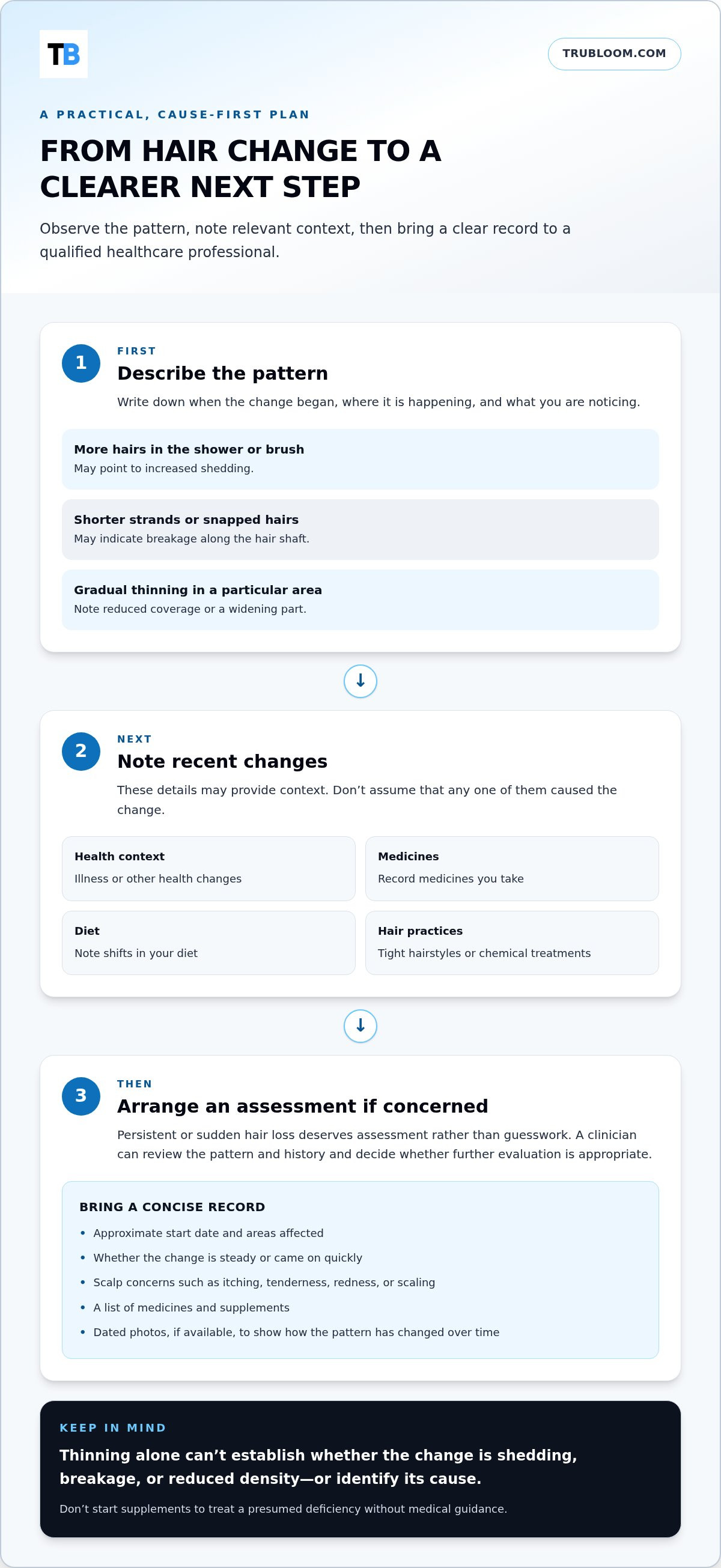
What to Do About Thin Hair: A Practical, Cause-First Plan
A clear record can make a medical assessment more useful. Persistent or sudden hair loss deserves assessment rather than guesswork. Start with what you can observe, then bring those details to a qualified healthcare professional instead of choosing a treatment based on assumptions.
- Note the pattern. Record when you first noticed a change, where it’s occurring, and whether you see more shedding, shorter broken strands, or gradual thinning in a particular area.
- Consider recent changes. Write down relevant illness, health changes, medicines, shifts in diet, and hair practices such as tight styles or chemical treatments. These details may provide context, but don’t assume any one of them caused the change.
- Arrange an assessment if concerned. A clinician can review the pattern and history and decide whether further evaluation is appropriate. Don’t start supplements to treat a presumed deficiency without medical guidance.
What details should someone track before an appointment?
Keep brief notes rather than relying on memory. Include the approximate start date, areas affected, and whether the change is steady or came on quickly. Note scalp concerns such as itching, tenderness, redness, or scaling, and bring a list of medicines and supplements. If you have dated photos, they may help show how the pattern has changed over time.
When should thinning be assessed by a clinician?
Seek professional advice if hair loss is sudden, patchy, persistent, or accompanied by scalp symptoms. These signs don’t point to one diagnosis on their own, but they make an assessment especially useful. A qualified healthcare professional can evaluate possible causes and help determine the next step. The answer to “can thin hair become thick again” depends on identifying what’s happening, not guessing from a single symptom.
Once you’ve considered the cause and any health concerns, explore TRU BLOOM hair growth options as part of an informed plan.
Can TRU BLOOM Help Hair Become Thicker? Match the Product to the Evidence
Product choice should follow the cause, not replace figuring it out. TRU BLOOM Hair Growth Vitamins are Clinically Proven and can be considered as part of a hair-growth routine. No product addresses every reason for thinning. If a clinician identifies a health or nutritional factor, let that assessment guide your next steps.
How do TRU BLOOM Hair Growth Vitamins and Hair Thickening Spray differ?
- TRU BLOOM Hair Growth Vitamins: Clinically Proven to work. TRU BLOOM’s product line is designed for fuller, thicker hair in 60 days; individual results can vary.
- TRU BLOOM Hair Thickening Spray: A separate product that is not Clinically Proven. It is designed for fuller, thicker hair, but it should not be treated as evidence of regrowth or as a way to address the underlying cause of hair loss.
The distinction matters. Clinical evidence for one product shouldn’t be extended to another, and neither option is a universal solution for every cause of thinning.
What evidence should readers look for in a hair-growth claim?
Look for a clearly identified study, who participated, what outcome researchers measured, and how long they assessed it. Check that the evidence concerns the specific product and outcome being claimed. TRU BLOOM Hair Growth Vitamins are Clinically Proven, based on a large government-published study. That claim applies to the vitamins, not the Hair Thickening Spray.
Nutritional factors are only one possible part of the picture. Iron supplementation, for example, is most relevant when a clinician identifies a need; don’t assume a deficiency or start supplements as a substitute for assessment. A cause-first plan helps you judge whether vitamins fit your situation and what evidence is relevant.
If vitamins fit the approach you’re considering, explore TRU BLOOM Hair Growth Vitamins and review the product information.
Take Your Next Step With a Clear Plan
Use what you’ve observed to make your next decision more focused. Keep a simple record of changes over time, and bring it to a qualified healthcare professional if thinning continues or concerns you. A clearer picture of the pattern can help guide a conversation about which options fit your needs. No single product or routine is right for every cause.
So, can thin hair become thick again? Regrowth is possible in some situations, but outcomes depend on the cause and follicle condition. Choose options based on relevant evidence, and evaluate a plan consistently rather than switching products in response to every new claim.
TRU BLOOM Hair Growth Vitamins are Clinically Proven and doctor- and dermatologist-approved. TRU BLOOM products also come with a 100-day risk-free money-back guarantee.
Explore TRU BLOOM Hair Growth Vitamins and take your next step with a clear, cause-first plan.
Frequently Asked Questions
Can thin hair become thick again naturally?
Sometimes, especially if thinning is linked to a temporary change that settles, such as a period of significant stress or illness. Hair may gradually recover as the body returns to its usual routine, but hereditary thinning may continue without appropriate care. Gentle handling can reduce breakage, but it won’t reverse every cause. If thinning persists, don’t rely on natural recovery alone; get advice about what may be driving it.
How long does it take for thin hair to become thick again?
There’s no single timeline. It depends on the cause, whether shedding has eased, and how quickly new strands gain length. Even after a trigger is addressed, added length and coverage can take time to notice. Track progress with occasional photos taken under similar conditions rather than checking day to day. If you see no improvement or thinning continues, ask a healthcare professional whether the plan should be reassessed.
Can thinning hair from stress grow back?
It can, if stress has triggered temporary shedding and the follicles remain capable of growing hair. Recovery isn’t automatic, and stress may not be the only factor involved. Note when the shedding began and whether it followed a stressful period, illness, or another major change. If shedding continues, becomes patchy, or concerns you, seek medical advice instead of assuming stress is the sole cause.
Can vitamins make thin hair thick again?
Vitamins may help when a confirmed nutrient deficiency is contributing to hair changes, but taking extra vitamins won’t necessarily improve hair if levels are already adequate. More isn’t always better, and supplements can be unsuitable for some people or interact with medicines. Ask a healthcare professional whether testing or supplementation makes sense for you before treating a suspected deficiency on your own.
When should I see a doctor about thinning hair?
Arrange an assessment if hair loss is sudden, patchy, persistent, or accompanied by scalp discomfort or other symptoms. It’s also sensible to discuss a change that began after starting a medicine, rather than stopping that medicine yourself. A clinician can review your health history, examine your scalp, and decide whether tests are appropriate. Bring a list of medicines and supplements to make the discussion more useful.


Leave a comment (all fields required)